

Alliance for an Energy Efficient Economy (AEEE) presents

FORUM ON ENERGY EFFICIENCY & DECARBONISATION (FEED) 2026

Energy Efficiency as the Engine of Viksit Bharat

3-4 February 2026

Eros Hotel, New Delhi

Alliance for an Energy Efficient Economy (AEEE) presents

FORUM ON ENERGY EFFICIENCY & DECARBONISATION (FEED) 2026

Energy Efficiency as the Engine of Viksit Bharat

3-4 February 2026

Eros Hotel, New Delhi

HIGHLIGHTS OF FEED

0 +

Registrations

0 +

Speakers

0

Sessions

0

Sponsors

0

Partners and Industry Associations

ABOUT THE EVENT

The Alliance for an Energy Efficient Economy (AEEE) presents the sixth edition of the Forum on Energy Efficiency and Decarbonisation (FEED) – a flagship platform driving dialogue and action on energy efficiency and climate resilience.

Building on FEED 2025, this year’s edition – themed “Energy Efficiency as the Engine of Viksit Bharat” – highlights India’s transition from intention to implementation to impact. FEED 2026 will explore how efficiency can power India’s vision for competitiveness, resilience, and inclusive prosperity, aligning with the national goal of Viksit Bharat 2047 and the global ambition to double energy efficiency improvement by 2030.

Through continued discussions anchored around four key levers – finance, technology, jobs, and data – the two-day event will examine how systems, institutions, and accountability can scale efficiency across sectors. The event will spotlight opportunities in MSMEs, buildings, cooling, transport, and emerging sectors such as data centres and digital infrastructure.

Join policymakers, industry leaders, innovators, and development partners as FEED 2026 charts India’s path toward a more competitive, resilient, and low-carbon economy – where energy efficiency drives national development.

AGENDA

All sessions will take place in the Main Hall

With India’s energy demand set to double, prioritising efficiency is vital for Viksit Bharat 2047. This session explores policy frameworks to achieve energy independence and avoid fiscal strain, aiming to unlock capital for broader economic growth, investments, and social development.

Session Co-curated with Ashoka Centre for a People-centric Energy Transition (ACPET)

The session will examine how market-based instruments such as CCTS, cooperative approaches under Article 6.2, India–Japan MoC on Joint Crediting Mechanism (JCM), Carbon Border Adjustment Mechanism (CBAM) effect and voluntary markets can promote energy efficiency. It will explore how these mechanisms can create demand, strengthen M&V, motivate stakeholders and accelerate efficient, low-carbon growth.

  • Gaurav Bhatiani
    Senior Fellow, Ashoka Centre for a People-Centric Energy Transition, Ashoka University
  • Kaushik Deb
    Executive Director, EPIC India
  • Rohit Kumar
    Secretary General, SAF Association and Carbon Markets Association of India
  • Ruchika Drall
    Deputy Secretary, Ministry of Environment, Forest and Climate Change (MoEF&CC), Government of India
  • Saurabh Diddi
    Director, Bureau of Energy Efficiency (BEE)
  • Shuchi Malhotra
    Lead Advisor, Carbon Markets, Environmental Defense Fund (EDF) in India

Session Co-curated with CLASP

This panel will discuss why strengthening sub-national actors with dedicated budgets, robust institutional systems, and a skilled pool of EE cadre/experts is essential for advancing energy efficiency. State representatives and experts will share insights on the impact and role of empowered insitutions in enhancing policy delivery and deepening state-level action, underscoring the critical role of subnational leadership in driving sustainable, scalable energy savings.

Knowledge Partner: Energy Efficiency Movement Association

India’s industrial sector is a cornerstone of its economic growth, contributing over 25% to GDP and consuming nearly 40% of total energy. With rising energy demand, cost pressures, and climate commitments, energy efficiency offers a strategic lever to enhance competitiveness, reduce emissions, and improve energy security. To catalyse scalable action on energy efficiency in India’s industrial sector by convening leaders from government, industry, and finance, the session will explore how to unlock the full potential of energy efficiency through cross-sector collaboration, policy enablers, and innovative financing mechanisms—driving competitiveness, affordability, and sustainability.

As India accelerates towards Viksit Bharat, cultivating a culture that makes energy efficiency second nature is more urgent than ever. Anchored in the spirit of Mission LiFE, this special session will explore how behavioural change, technology, and storytelling can embed efficiency into everyday life. The conversation will delve into why people and systems power are the true engines of transformation and how they can turn efficiency from a policy goal into a national movement.

India’s cooling demand is rising rapidly, already contributing significantly to electricity use and peak-load growth. Cooling-as-a-Service (CaaS) shifts cooling from equipment ownership to performance-based delivery, enabling affordability, efficiency, and peak-load management. Aligned with the India Cooling Action Plan, this session brings together cross-sector expertise to examine how CaaS can decouple rising comfort needs from energy use, peak demand, and emissions, focusing on market readiness, policy enablers, and scalable pathways for public buildings, commercial spaces, and urban developments.

Session Co-curated with Kazam

India’s rapidly growing EV ecosystem for two- and three-wheelers depends on stronger residential charging, especially with the rise of delivery fleets where access remains a critical bottleneck. This session highlights the importance of home charging, the regulatory and infrastructure barriers in housing societies, technology and policy enhancements, and how enabling residential charging can boost fleet efficiency, reduce costs, and accelerate last-mile logistics electrification.

  • Akshay Shekhar
    Co-Founder and CEO, Kazam
  • Jaideep Saraswat
    Associate Director, Clean Power, Electric Mobility and Emerging Technologies, Vasudha Foundation India
  • Pradeep Aggarwal
    General Manager, EV cell and Open Access, BSES Rajdhani Power Ltd
  • Sumedh Agarwal
    Director, Smart and Resilient Power and Mobility (SRPM), Alliance for an Energy Efficient Economy (AEEE)

Over the next half decade, the most competitive Indian sectors will not be defined by what they build or operate, but by how efficiently they convert energy into value. India does not face an energy shortage problem. It faces an efficiency execution problem. Across large, energy-intensive operational environments, spanning public infrastructure, industrial operations, and commercial ecosystems—every unoptimized system represents silent capital leakage. Energy efficiency is no longer a sustainability aspiration; it is a profit recovery lever, a decarbonisation strategy, and a prerequisite for delivering the Viksit Bharat 2047 vision. The leaders of the next decade will be those who command energy, not merely monitor it, using automation, digital twins, IoT, and AI systems that can predict, decide, and act in real time across complex, always-on operations. This session brings together public-sector operators and industry practitioners to move the conversation decisively from policy intent to on-ground execution. At its core, the discussion explores how next-generation Enterprise Energy Management Systems (EEMS), integrating electrical, thermal, and digital infrastructure, are becoming mission-critical operating systems for India’s large-scale built environments and production ecosystems.

Session Co-curated with INDEE3

India’s refrigerant transition is accelerating as the country prepares to phase down HFCs under the Kigali Amendment. This session explores policy frameworks, emerging low-GWP refrigerant technologies, and sector readiness, highlighting opportunities and challenges for a smooth, economically viable transition aligned with India’s climate and energy goals.

This session delves into the critical barriers that hinder large-scale Energy Efficiency (EE) deployment across public systems—particularly municipal water pumping and building cooling. It will highlight innovative financial structures that can make EE interventions bankable and replicable, and explore pathways to unlock sustainable, non-sovereign financing to accelerate adoption.

Session Co-curated with UNEP

As the world’s second-largest producer of fruits and vegetables, India incurs nearly 18% post-harvest losses due to weak farm-level aggregation and pre-cooling infrastructure. Developing new, sustainable packhouses is critical to address this gap by enabling efficient pre-cooling, grading, sorting, and aggregation close to production centres. Energy-efficient and renewable energy–powered packhouses can reduce losses, improve produce quality, strengthen market access, and enhance farmer incomes. Aligned with the India Cooling Action Plan (ICAP) and Doubling Farmers’ Income goals, this workshop will convene policymakers, industry experts, and practitioners to focus on greenfield sustainable packhouses, exploring technology options, financing models, and capacity-building needs. The discussions will identify actionable pathways, investment opportunities, and policy enablers to scale adoption nationwide.

India’s affordable housing challenge is increasingly shaped by climate risk, rising energy costs, and the dominance of self-built construction. This session examines the systemic barriers that prevent self-built homes from being climate-resilient and energy-efficient, drawing on evidence from field studies. It will explore gaps across design, construction materials, skills, funding and policy, and how the housing delivery ecosystem can enable practical technical, financial, and policy interventions to strengthen future self-built affordable housing programmes.

Precise, problem-driven articulation is critical to accelerate climate-tech innovation in the built environment. It reduces wasted R&D, speeds pilot adoption, lowers market risk, and attracts investors. This session will explore co-developing high-impact problem statements to shorten time-to-market and scale climate-resilient solutions.

  • Aneesh Kadyan
    Senior Executive Director, Property Management Operations, CBRE South Asia Pvt Ltd
  • Aun Abdullah
    Vice President, Lodha
  • Gian Modgil
    Team Lead, HCL ClimaForce Fund
  • Mili Majumdar
    Managing Director, GBCI India; Senior Vice President, Innovation and Research, US Green Building Council
  • Priyank Garg
    ex-Managing Partner, IAN Alpha fund

This session explores how high-resolution building data—like the Geospatial Open Building Stack (GOBS)—can transform urban governance. Experts will discuss actionable use cases for energy efficiency, heat resilience, and disaster planning, examining how granular insights can drive policy interventions and decarbonise India’s rapidly growing cities.

The Challenge
Cities are complex puzzles of energy, heat, and infrastructure. AEEE is opening access to its Geospatial Open Building Stack (GOBS), an open, high-resolution dataset of building-level attributes available at gobs.aeee.in—and challenging you to de-code these layers.

THEMATIC AREAS

Implementing a systems approach to energy efficiency

Adoption of innovative energy-efficient technologies

Integration of energy efficiency and demand flexibility

Driving sub-national initiatives for energy efficiency

Advancing low-carbon building solutions

Ensuring thermal comfort for all

Sustainable cold chain for agriculture

Promoting energy efficiency as a service

Facilitating financing for energy efficiency projects

Monitoring and assessing progress and impact of energy efficiency efforts

Keynote

Shri Pankaj Agarwal

Shri Pankaj Agarwal, IAS

Secretary, Ministry of Power, Government of India

Special Address

Shri Krushna Chandra Panigrahy

Director General, Bureau of Energy Efficiency
SPEAKERS

Head, Strategy, Energy Efficiency Services Limited
CEO, BSES Rajdhani Power Ltd
Director, Bureau of Energy Efficiency

Scientist ‘F’ / Director, Ozone Cell, MoEFCC, GoI
Co-Founder and CEO, Kazam
Director, Electricity and Renewables, TERI
Head, Sales – CBS, NWE Region, Grundfos
Senior Programme Lead, CEEW
Senior Executive Director, Property Management Operations, CBRE South Asia Pvt Ltd
Sustainable Cold-chain Expert, UNEP
Director, GreenTree Global
Director, BEE
Founder and CEO, Smart Joules
General Manager, Business Development, Tabreed India
Senior Co-ordinator – India, SEforALL
Founder, Ashok B Lall Architects
Vice President, Lodha
Project Lead – South Asia, Green and Resilient Buildings, IFC
Head of Innovation, Cooling, Thermax Ltd
Vice President, Energy Division, Alfa Laval India
Senior Climate Change Officer, Asian Development Bank
Principal Research Associate, AEEE
Senior Fellow, Ashoka Centre for a People-Centric Energy Transition, Ashoka University
Team Lead, HCL ClimaForce Fund
Director, Energy Management Centre, Kerala
Former Director, National Institute of Urban Affairs
Associate Director, Clean Power, Electric Mobility and Emerging Technologies, Vasudha Foundation India
Director, Marketing, Alliances and Partnerships, AEEE
Executive Director, EPIC India
Principal Research Associate, AEEE
President, Mithila Vegetable Union
Senior Professor, Mechanical Engineering, BITS Pilani
Head, Life Cycle Solution, Carrier HVAC
Co-founder, Two Point O Capital
Principal Research Associate, AEEE
Managing Director, Energy Efficiency Movement Association
Managing Director, GBCI India; Senior Vice President, Innovation and Research, US Green Building Council
Secretary, Bureau of Energy Efficiency

Vice President and Head, Strategy and Growth, Triveni Turbines
Regional Director, South & West Asia Regions and Mayoral Engagement, C40 Cities
Climate Journalist and Founder, News with Navya
Director – India, CLASP
Director, Bureau of Energy Efficiency

Deputy Head, Energy Efficiency Programmes, GIZ India
Founder, Cool The Globe
General Manager, EV cell and Open Access, BSES Rajdhani Power Ltd
Senior Director, Research and Programmes, Alliance for an Energy Efficient Economy (AEEE)
Senior Fellow, AEEE; Director, SDI
Manager, CLASP
ex-Managing Partner, IAN Alpha fund
Founder and President, Netzero Energy Transition Association
Executive Director (Technical), Airport Authority of India
Director, CSR and Sustainability, Schneider
Secretary General, SAF Association and Carbon Markets Association of India
Deputy Secretary, Ministry of Environment, Forest and Climate Change (MoEF&CC), Government of India
President, Motion Business, ABB India Ltd
Vice-chair, Executive Council, AEEE and President, STENUM Asia Sustainable Development Society
Principal Research Associate, AEEE
Founder and director, Sunmeister Energy Pvt. Ltd.
President and Executive Director, AEEE
Director, Bureau of Energy Efficiency (BEE)

Lead Advisor, Carbon Markets, Environmental Defense Fund (EDF) in India.
Energy Efficiency Analyst and Coordinator – India, IEA

Programme Lead, CEEW
CEO and Co-Founder, Energeia
CEO, National Cooperative Union of India
Former Director, National Environmetal Engineering Research Institute (NEERI)
Director, Smart and Resilient Power and Mobility (SRPM), Alliance for an Energy Efficient Economy (AEEE)
Program Head, Building Decarbonisation, WRI India
Country President – India, Grundfos Pumps India Pvt Ltd
Executive Engineer, Environment and Climate Change, BMC
President, IEEMA

SPONSORS AND PARTNERS

Platinum Sponsors

Gold Sponsor

Silver Sponsors

Session Sponsor

Knowledge Partners

Outreach and Network Partners

PREVIOUS SPONSORS

Previous Co-organisers, Networking, Outreach and Knowledge Partners

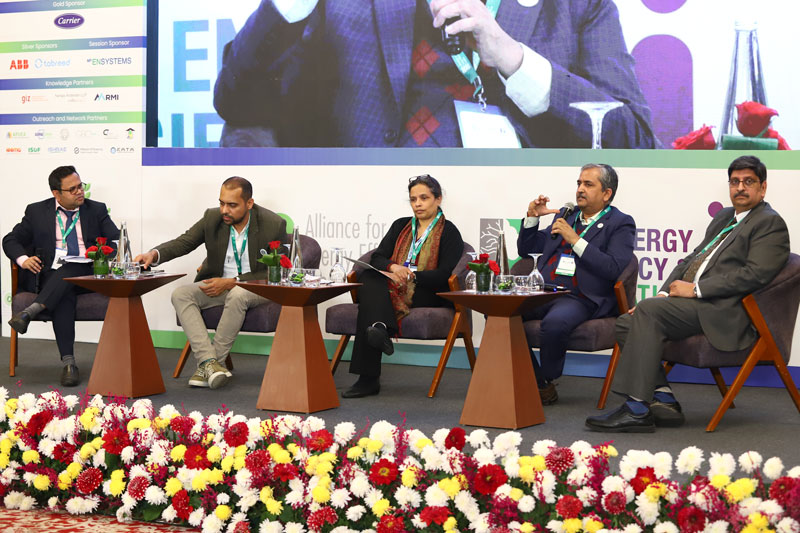
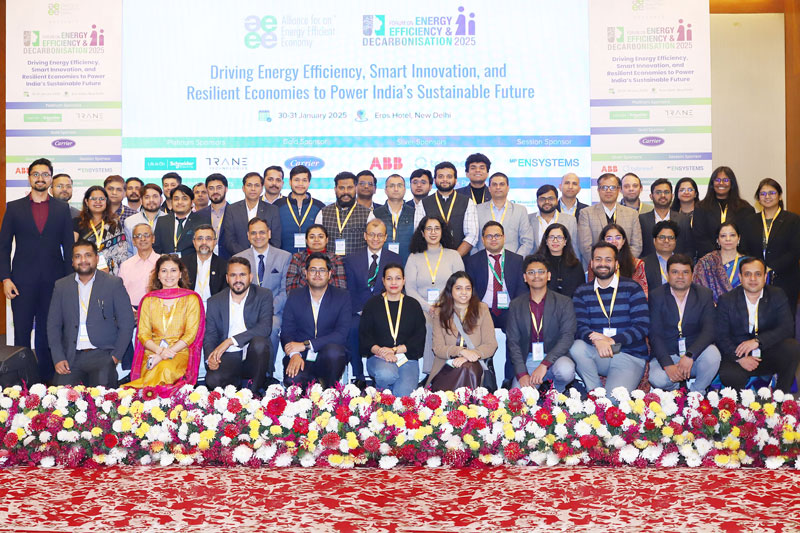
FEED GALLERY

CONTACT US

For further queries, please contact:

Address

Alliance for an Energy Efficient Economy
37, Link Road, Ground Floor, Lajpat Nagar III, New Delhi 110024

Email

info@aeee.in
bhairav@aeee.in
Mr Bhairav Sharma, Dy Manager-Membership and Training

Phone Number

T: 011 4123 5600
D: 011 4123 5617

ABOUT THE ORGANISER​

AEEE is a leading non-profit organisation working to advance energy efficiency as a resource and providing policy and implementation support to catalyse responsible energy use for a climate-resilient and energy-secure future.